Inbound
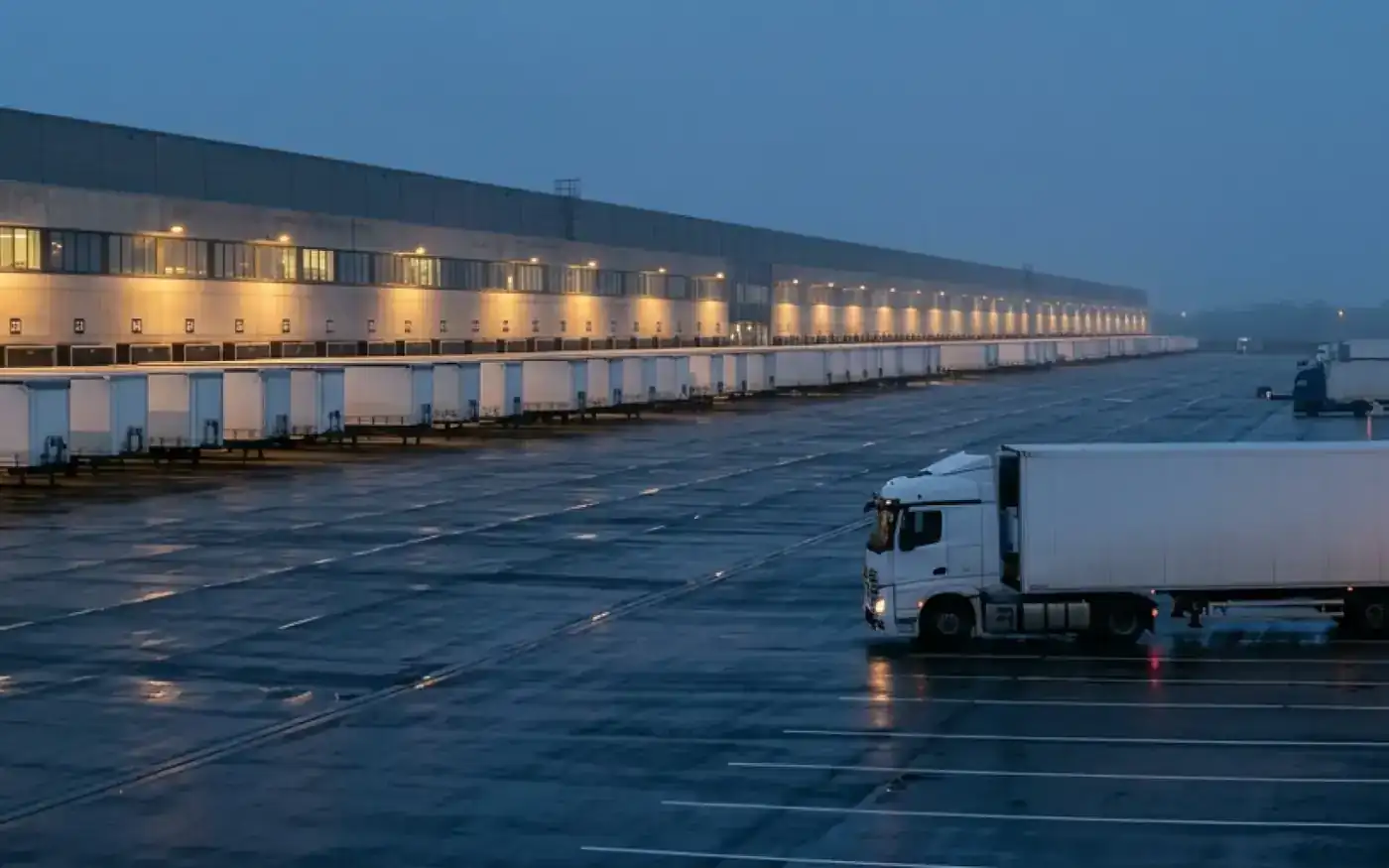
No vehicle reaches your yard that you were not expecting, and every minute it spends there is timed against a plan you set.
UI-02 · Live yard scheduler and execution view
Real screen here (16:10, sanitised). Booked arrival, check-in status, bay position, one early arrival on the exception list.
What it ends
Suppliers arrive when it suits them, and the yard absorbs it.
Trucks that were never booked reach the boom. Vehicles queue in a yard nobody is timing, so the delay is real and the number does not exist. When it is disputed afterwards, the only record is a handwritten register.
Your ERP
Raises the purchase order.
The gate and the yard
Your WMS
Takes over once the stock is received.
How it runs
Five steps, from purchase order to exit gate.
Every vehicle is expected before it arrives, checked at the boom, and timed from the gate to the exit.
01 · Supplier portal
Book
A slot requested against your purchase orders, by the supplier or by the carrier on their behalf.
02 · Automatic
Issue
A gate pass generated automatically, carrying the slot, the orders, your site terms and a barcode.
03 · Hard stop
Gate
Scanned at entry. Expected and on time goes straight through. Early, late or unknown follows the exception route.
04 · Scheduled
Bay
Allocated to a bay scheduled for that activity, with the clock running from the moment it berths.
05 · Evidenced
Exit
Departure recorded against the slot, with every status change stamped and attributed.
What it does
What it controls, what it
records, what you see.
What it controls
Which suppliers may book, and into which activity.
Licence and permit validations, enforced as hard stops.
Early, late and unexpected arrivals, by exception rather than by argument.
What it records
Arrival and departure, to the minute, attributed to a named user.
Gate to bay, time in bay, bay to exit.
Planned against actual bay hours, by activity.
What you see
A live scheduler and a live execution view of the yard.
Six adherence measures against a tolerance you set.
A scorecard per supplier, visible to that supplier.
In the product
Built for the gate, the yard
and the supplier.
UI-02a · Supplier booking
Real crop, sanitised
Book against the order
Suppliers and carriers book through the portal before the vehicle leaves.
UI-02b · Gate scan
Real crop, sanitised
Scan at the gate
Expected and on time goes straight through.
UI-02c · Supplier scorecard
Real crop, sanitised
Score every supplier
The same scorecard is visible to the supplier.
What changes
What stops
happening.
Suppliers arriving when it suits them. Unexpected vehicles reaching the gate. Queues nobody is timing, and arguments afterwards about what time a truck actually arrived and left.
What you measure from day one
01
On-time arrival and departure, by tolerance
02
Gate to bay, time in bay, bay to exit
03
Planned against actual bay hours
04
Supplier by supplier adherence
Who uses it
Four teams,
working from one record.
Suppliers, the gate, the yard and management all read the same record, so nothing is typed in twice and nobody argues about the time.
Suppliers and carriers
Book slots against your orders.
Gate security
Scan passes and follow the exception route.
Yard and bay control
Schedule bays and run the yard live.
Inbound and DC managers
Measure adherence and bay hours.
Clients
“[Inbound customer quote: one before and after measure from their own baseline, such as gate to bay time, in their words, approved for publication.]”
[Name]
[Role], [Company]


Next
If your supplier deliveries arrive when they like, start here.
The measures are taken on your floor, against your own baseline, before anything changes. You get a first baseline early; the complete record builds over the months that follow.